
Why Your Builder Needs a Construction Survey Before Anyone Picks Up a Shovel
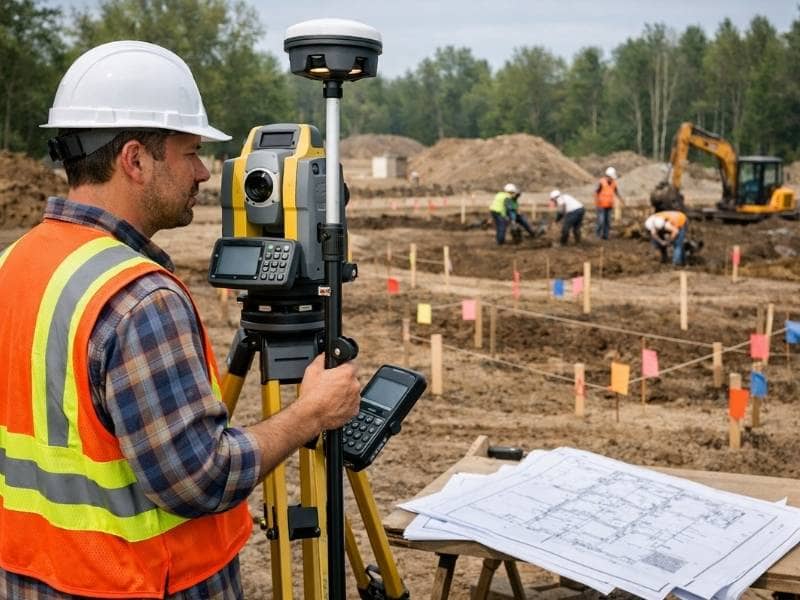
A lot happens before a single shovel hits the ground on a building project. One of the most important steps is a construction survey. A licensed surveyor visits the property and places physical markers showing exactly where every part of the building will go. Without this step, even the best building plans are just lines on paper. A construction survey turns those plans into real points on the ground so your builder knows exactly where to start.
What Is a Construction Survey?
A construction survey is when a licensed land surveyor marks the exact spot where a building or structure will be placed on the ground. The surveyor uses the approved building plans to put stakes, pins, or flags in the right places so the crew knows where to dig, pour concrete, and build.
Think of it this way. An architect draws a building on paper. The surveyor then takes those same measurements and marks them directly on the land. Every corner, every wall, and every utility connection gets its own physical marker before any work starts.
Construction surveys are used for homes, offices, roads, parking lots, and utility lines. Any project that needs to be placed in a specific spot on a piece of land will need one.
What Is Site Staking?
Site staking is the part of a construction survey where the surveyor hammers wooden stakes or metal pins into the ground. Each marker shows where a specific part of the building or project will go. The construction crew uses these stakes as their guide from start to finish.
Stakes are placed at spots like:
- Building corners and the edges of the foundation
- The center and edges of roads and driveways
- Trenches for water pipes, sewer lines, and electrical lines
- Areas where the ground level needs to be raised or lowered
- Locations for retaining walls and drainage features
Every stake is labeled so the crew knows what it marks and what measurement goes with it. Without these markers, workers would have no way to know if they are digging or building in the right spot.
How Is a Construction Survey Different from Other Surveys?
A topographic survey maps the shape of the land before any planning begins. A boundary survey marks where the property legally begins and ends. A construction survey comes after both. It takes the finished design and marks it on the ground so the crew can follow it.
Each survey does a different job. A topographic survey gives the designer the land information they need. A boundary survey confirms the property lines. A construction survey puts the final building plan on the ground so work can begin in the right place.
When Is a Construction Survey Required?
A construction survey is needed any time something is being built on a piece of land. This includes new homes, offices, roads, parking areas, and utility lines. Most builders, lenders, and local governments will ask for one before any work begins.
Here are the most common projects that need construction staking.
New Home Construction
When building a home, the surveyor marks the four corners of the foundation before any digging starts. This makes sure the house sits in the right spot, stays within the property lines, and follows the setback rules set by local zoning laws. Setbacks are the required distances between a building and the property line.
Commercial Buildings and Parking Lots
Bigger projects have a lot more points to mark. These include the outline of the building, parking spaces, curbs, drainage openings, and utility hookups. A construction survey makes sure every part of the project lands in the right place based on the approved plan.
Roads and Driveways
Roads need stakes along the center, the edges, and where drainage will go. If a road is built in the wrong spot or at the wrong slope, it can cause water to drain the wrong way and create safety problems over time.
Utility Lines
Water pipes, sewer lines, gas lines, and electrical cables all need to be buried in the right place and at the right depth. A construction survey marks those paths so crews dig in the right direction the first time around.
What Happens If You Skip the Construction Survey?
Skipping this step can cause big and expensive problems. A building that is placed even a few feet off can cross into a neighbor’s property, break zoning rules, or cause water to drain in the wrong direction. Fixing these problems after a build is underway, or after it is finished, will cost much more than the survey ever would have.
In some areas, a construction survey is required by law before a building permit is approved. This helps local governments make sure new buildings are in the right place and do not cause problems for nearby properties.
How Accurate Is Construction Staking?
Construction surveys are some of the most precise surveys done by land surveyors. Today’s surveyors use GPS tools and robotic equipment that can place a stake within a tiny fraction of an inch from where it needs to be.
According to the National Society of Professional Surveyors, construction staking can reach an accuracy of one-hundredth of a foot or better. That level of precision is what allows large buildings and complex projects to be built exactly the way they were designed.
How Much Does a Construction Survey Cost?
For a home, construction staking usually costs between $500 and $1,500. Larger projects like commercial buildings or roads will cost more. The best way to get a real price is to contact a licensed land surveyor and share your project plans.
A few things affect the final cost:
- Project size: A bigger project means more stakes and more time in the field.
- Complexity: Projects with lots of structures, utility lines, or grading work take more effort to stake out correctly.
- Number of visits: Some projects need the surveyor to come back more than once as different stages of construction begin.
- Local rates: Prices can vary depending on where the property is located.
Who Should Do a Construction Survey?
A construction survey must be done by a licensed professional land surveyor. The stakes they place guide every decision the construction crew makes. If those stakes are wrong, the whole project can end up off course. Only a licensed surveyor has the right training and legal authority to do this work correctly.
When hiring someone for construction staking, look for a surveyor who has experience with this type of work, can read construction plans, and is willing to work closely with your builder or contractor.